Coloring and Identifying 3D Shapes: A Practical Tool for Geometry Learning
Geometry is a fundamental component of mathematics education, particularly in early learning stages where students begin to understand spatial relationships and object properties. One effective way to introduce three-dimensional (3D) shapes is through interactive activities like Coloring and Identifying 3D Shapes. This resource provides educators with five structured worksheets in PDF format, designed to help students reinforce their knowledge of geometric solids such as cubes, spheres, cylinders, cones, pyramids, and prisms. These worksheets are not only educational but also engaging, offering a hands-on approach that supports visual learning and conceptual clarity.
What Is Coloring and Identifying 3D Shapes?
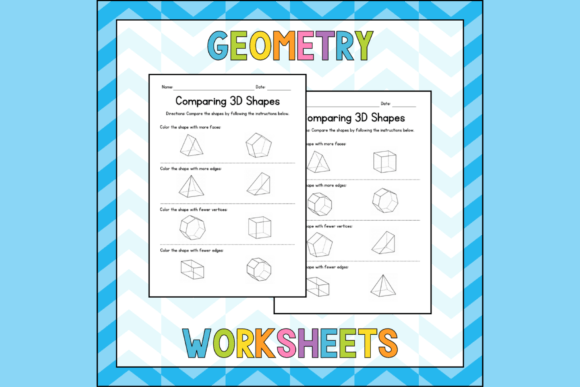
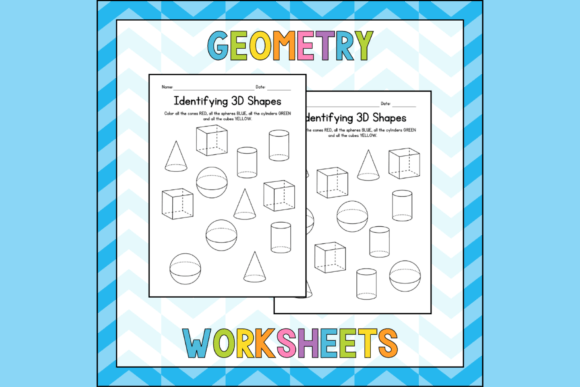
Coloring and Identifying 3D Shapes is an educational tool that combines art and math in a single activity. Each worksheet features outlines or diagrams of various 3D shapes, along with instructions guiding students to color them according to specific criteria—such as matching colors to shape names or identifying certain attributes. The act of coloring helps learners focus on the form and structure of each shape while reinforcing vocabulary and properties associated with geometry.
This resource is especially valuable because it moves beyond passive memorization. By actively participating in the process of identifying and coloring shapes, students can better grasp how these objects appear in both abstract and real-world contexts. It’s a versatile tool that supports multiple learning styles and paves the way for deeper understanding.
Purpose and Educational Value
The primary purpose of this set of worksheets is to provide a clear and structured method for teaching and reviewing 3D shapes. Educators often face the challenge of making abstract concepts tangible for young learners, and Coloring and Identifying 3D Shapes addresses this by using visual engagement and kinesthetic interaction. Coloring encourages attention to detail and helps students differentiate between similar shapes based on their characteristics.
In addition, these worksheets serve as a foundation for more advanced geometric concepts. Once students can accurately identify and classify 3D shapes, they’re better equipped to study volume, surface area, nets, and spatial reasoning. The exercises included in these pages help bridge the gap between theoretical knowledge and practical application, which is essential for building confidence in math skills.
Key Features and Strengths
- Five Differentiated Worksheets: The collection includes a variety of tasks, allowing for progressive learning and differentiation within the classroom. Students can start with basic identification and move toward more complex labeling and classification.
- PDF Format: The digital delivery makes it easy to download, print, and distribute. Teachers can integrate the worksheets into existing lesson plans without hassle.
- Clear Instructions: Each worksheet is accompanied by straightforward directions, ensuring that students can work independently or in small groups with minimal supervision.
- Visual Appeal: The design elements are clean and organized, reducing cognitive load and helping students stay focused on the task at hand.
- Reusable and Adaptable: Since the content is in PDF, it can be easily modified to suit different grade levels or learning objectives. Teachers may choose to laminate sheets for repeated use or create custom variations for individual needs.
Real-World Application and Usability
In practice, Coloring and Identifying 3D Shapes has proven to be a flexible and effective teaching aid. For example, during morning warm-ups, teachers can use one of the worksheets to quickly review key terms and properties. In a short assessment scenario, these pages can test students’ ability to recognize and label 3D shapes correctly under time constraints.
The activity also works well in group settings, where collaborative problem-solving can enhance learning outcomes. When students work together to match shape names with colored sections, they engage in peer-to-peer discussions that clarify misunderstandings and reinforce correct terminology. This social learning dynamic can be especially beneficial in classrooms where differentiated instruction is necessary.
From a usability standpoint, the PDF format ensures compatibility across devices and platforms. Whether you're using a desktop computer, tablet, or smartphone, the files open consistently, preserving layout and formatting. This reliability is crucial for maintaining professionalism and clarity when distributing materials to students or colleagues.
Who Can Benefit Most from This Resource?
While the worksheets are ideal for elementary and middle school students, they can also benefit adults who are revisiting geometry fundamentals—especially those preparing for standardized tests or certification exams. The simplicity and clarity of the exercises make them suitable for a wide range of ages and abilities.
Educators will find these worksheets particularly useful for:
- Introducing new geometry topics;
- Providing extra practice for struggling learners;
- Engaging visual learners who benefit from colorful illustrations;
- Creating interactive homework assignments;
- Supporting homeschooling environments where parents need ready-made resources.
These worksheets are equally beneficial in special education settings, where repetitive, low-pressure activities can help students build familiarity and retention over time. The structured nature of the tasks supports scaffolding and allows for incremental progress, making it easier for educators to track student development.
Design and Presentation Considerations
One of the standout aspects of Coloring and Identifying 3D Shapes is its presentation. The worksheets are visually balanced, avoiding clutter and unnecessary text. Each page is designed to guide students step-by-step through the activity, with ample space for coloring and labeling. The use of consistent fonts and layouts contributes to a professional appearance, which enhances credibility and ease of use.
However, it's important to note that the effectiveness of these worksheets largely depends on how they are introduced and contextualized. Simply handing out a printed sheet without explanation might lead to confusion. To maximize impact, consider pairing the activity with a brief lesson or demonstration that connects the shapes to real-life examples—like explaining that a cylinder looks like a soup can or that a cube resembles a dice.
Flexibility and Long-Term Value
Another strength lies in the flexibility of the resource. Educators can adapt the worksheets for various purposes:
- As part of a full geometry unit;
- For quick review sessions before quizzes or exams;
- Integrated into cross-curricular projects involving art or architecture;
- Used in centers or stations for independent learning;
- Shared with parents for home reinforcement.
Because the worksheets cover a range of difficulty levels, they offer long-term value. They can be used throughout the academic year, either as initial lessons or as periodic refresher tools. Their reusability means teachers won’t have to recreate materials from scratch, saving time and effort in curriculum planning.
Limitations and Recommendations
Despite its strengths, there are a few limitations to consider. First, the worksheets are primarily static and do not include interactive digital components. While this is not inherently a drawback, it does mean that tech-savvy classrooms may need additional tools to complement the activity. Second, the resource focuses solely on identification and coloring, so it should be supplemented with other types of exercises—such as measurement tasks or construction of 3D models—for a comprehensive geometry experience.
To get the most out of Coloring and Identifying 3D Shapes, consider the following recommendations:
- Use the worksheets as part of a larger geometry lesson plan;
- Incorporate discussion questions after completing the activity to assess understanding;
- Encourage students to bring in everyday objects that match the shapes studied;
- Offer extension activities, such as creating 3D shape collages or designing their own problems;
- Provide feedback that highlights both accuracy and creativity in coloring choices.
These strategies can help turn a simple exercise into a rich learning opportunity that promotes critical thinking and curiosity about geometry.
Why This Resource Stands Out
Compared to generic geometry drills or flashcards, Coloring and Identifying 3D Shapes offers a more engaging and memorable approach. The combination of artistic expression and mathematical learning taps into multiple intelligences, making it accessible to a broader spectrum of learners. Additionally, the structured format of the worksheets ensures consistency in what is taught and assessed, which is vital for tracking progress and aligning with curriculum standards.
Its practicality cannot be overstated. With just a printer and some colored pencils, educators can create meaningful learning experiences that require no additional investment. This affordability makes it an excellent choice for schools with limited budgets or individuals looking to support remote learning initiatives.
Final Thoughts
If you're an educator seeking a reliable, adaptable, and engaging way to teach 3D shapes, then Coloring and Identifying 3D Shapes could be a valuable addition to your toolkit. It supports foundational learning, promotes active participation, and aligns with modern pedagogical approaches that emphasize multisensory instruction. However, it works best when integrated with other methods to ensure a well-rounded understanding of geometry concepts.
Ultimately, the success of this resource hinges on how it is implemented. Used effectively, it can transform abstract ideas into concrete knowledge and foster a positive attitude toward math. Whether you're introducing 3D shapes for the first time or reinforcing prior learning, these worksheets offer a creative and efficient solution.