Exploring the Properties of 3D Shapes Through Engaging Worksheets
Understanding the properties of three-dimensional (3D) shapes is a fundamental part of geometry education. These properties include elements such as faces, edges, vertices, and volume, which help students visualize and analyze objects in real-world contexts. To facilitate this learning process, educators often rely on Properties of 3D Shapes Worksheets, particularly those in PDF file format. These worksheets are designed to be versatile tools that support both classroom instruction and independent practice.
What Are the Key Features of 3D Shapes?
Before diving into how worksheets can aid in teaching these concepts, it’s important to define what makes a shape three-dimensional. Unlike two-dimensional shapes, which exist only in length and width, 3D shapes have depth as well. This adds complexity to their structure and introduces new mathematical properties to explore.
- Faces: The flat surfaces of a 3D shape. For example, a cube has six square faces.
- Edges: The lines where two faces meet. A rectangular prism has 12 edges.
- Vertices: The corners or points where edges intersect. A cone has one vertex at its tip.
- Volume: The amount of space inside the shape, measured in cubic units.
- Surface Area: The total area of all the faces combined.
How Do Worksheets Help Reinforce These Concepts?
Worksheets provide structured opportunities for students to apply their knowledge of 3D shapes. Each worksheet typically includes exercises that require identifying shapes, counting their features, calculating volume and surface area, and sometimes even drawing nets or models. With consistent practice, students develop spatial reasoning skills and gain confidence in working with geometric principles.
The Benefits of Using PDF-Based Worksheets
One of the most common and practical formats for distributing educational materials is the PDF file format. Here are several reasons why using Properties of 3D Shapes Worksheets – PDF is advantageous:
- Accessibility: PDFs can be easily downloaded and printed, making them ideal for both in-person and remote learning environments.
- Consistency: The layout remains the same across different devices, ensuring clarity and accuracy in content delivery.
- Portability: Teachers can share these files digitally, allowing students to access them from anywhere at any time.
- Customizability: While the core content remains intact, some versions allow for annotations or digital fill-ins, supporting interactive learning.
Real-World Relevance of 3D Shape Properties
Geometry isn’t just about memorizing formulas—it's about understanding how these concepts appear in everyday life. From architecture to engineering, knowing the properties of 3D shapes is essential. For instance, when constructing a building, engineers calculate the surface area of walls and the volume of rooms to determine material requirements and structural integrity. Similarly, artists and designers use 3D shapes to create sculptures and product designs. By practicing through Properties of 3D Shapes Worksheets, students begin to see the relevance of geometry beyond the classroom.
Use Cases for Educators and Students
These worksheets are incredibly flexible and can be integrated into various aspects of the learning process. Whether you're an educator preparing for a lesson or a student looking to reinforce your understanding, there are multiple ways to utilize these resources effectively.
Short Assessments
A quick way to evaluate comprehension is by using Properties of 3D Shapes Worksheets as short assessments. These can be administered after introducing a new concept or before moving on to more advanced topics. The questions can range from basic identification of shapes to complex problem-solving involving calculations of volume and surface area.
Morning Work or Warm-Up Exercises
Starting the day with a few targeted questions helps activate prior knowledge and set the tone for the lesson ahead. Morning work based on 3D shape properties encourages students to think critically and engage with the topic right away. It also allows teachers to identify areas where students may need additional support.
Independent Practice and Homework
Homework assignments using these worksheets give students the chance to consolidate their learning outside of class. The PDF format ensures that they can complete the tasks on paper or digitally, depending on their preference and access to technology.
Designing Effective Worksheets: What to Look For
When selecting or creating Properties of 3D Shapes Worksheets, certain characteristics should be considered to maximize their effectiveness. A good worksheet should balance challenge and clarity, offering a variety of problems that cater to different learning styles and abilities.
- Visual Clarity: Diagrams and illustrations are crucial for helping students grasp abstract concepts like edges and vertices.
- Diverse Question Types: Including matching exercises, multiple-choice questions, and open-ended problems keeps students engaged and tests their understanding in multiple ways.
- Gradual Complexity: Starting with simple identification and progressing to more complex calculations supports a step-by-step learning journey.
- Clear Instructions: Well-written prompts ensure that students understand exactly what is expected of them.
Examples of Common 3D Shapes Covered in Worksheets
Most sets of Properties of 3D Shapes Worksheets include a variety of commonly studied shapes. These might include:
- Cube: Six equal square faces, twelve edges, eight vertices.
- Sphere: No edges or vertices; perfectly round with a continuous curved surface.
- Cylinder: Two circular bases connected by a curved surface; no vertices.
- Pyramid: A base that can be triangular, square, or polygonal, with triangular faces converging at a single vertex.
- Prism: Two identical polygonal bases connected by rectangular faces.
By practicing these examples, students learn to distinguish between similar shapes and understand how their properties affect their classification and application.
Encouraging Engagement and Fun in Geometry Learning
Many educators find that traditional geometry lessons can be dry and uninspiring. However, using Properties of 3D Shapes Worksheets—especially those designed with interactive and visual components—can significantly enhance student engagement. Activities like coloring the faces of a 3D shape, labeling parts of a diagram, or solving puzzles related to vertices and edges make the learning experience enjoyable and memorable.
Interactive Elements That Make a Difference
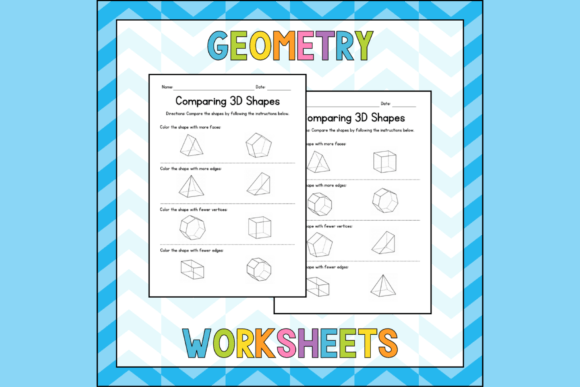
Some worksheets incorporate games, riddles, or real-life scenarios to teach the properties of 3D shapes. For example, a question might ask, “Which 3D shape best represents a soccer ball?” prompting students to recall the characteristics of a sphere. Other worksheets might challenge students to build models using nets or compare and contrast different types of prisms and pyramids.
Why Five Worksheets Matter
Having five distinct Properties of 3D Shapes Worksheets provides a comprehensive approach to mastering this topic. Each worksheet can focus on a different aspect, such as:
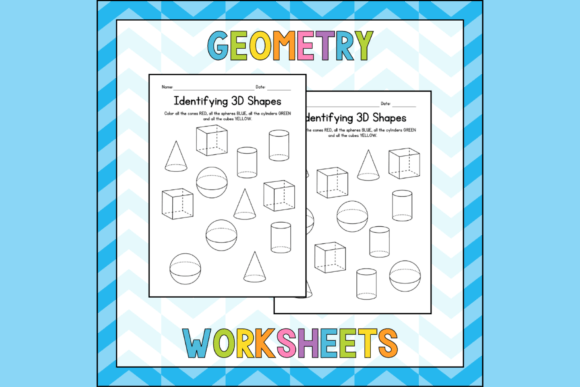
- Identification and naming of 3D shapes
- Counting faces, edges, and vertices
- Calculating volume and surface area
- Comparing 2D and 3D representations
- Applying knowledge to solve word problems
This variety ensures that students don’t become fatigued by repetitive tasks and instead remain challenged and motivated throughout their learning journey.
Supporting Differentiated Instruction
With five worksheets, teachers can tailor their instruction to meet the needs of diverse learners. Some students may benefit from beginning with simpler tasks like shape recognition, while others may be ready to tackle advanced problems involving formulas and measurements. This differentiation fosters inclusive learning and helps each student progress at their own pace.
Boosting Teaching Efficiency with Ready-to-Use Resources
For educators, time is a precious resource. Pre-made Properties of 3D Shapes Worksheets – PDF eliminate the need to create materials from scratch, saving valuable planning time. These worksheets are often aligned with curriculum standards and come with answer keys, making grading and feedback more efficient. Additionally, many versions are designed to be used in multiple sessions, either as standalone activities or as part of a larger unit on geometry.
Integrating Technology and Traditional Methods
While PDF worksheets are traditionally printed, they can also be used in digital classrooms. Teachers can assign them via online learning platforms, and students can complete them using digital tools or submit answers electronically. This dual functionality enhances flexibility and supports hybrid or fully online teaching models.
Considerations When Choosing or Creating Worksheets
To get the most out of Properties of 3D Shapes Worksheets, consider the following factors when choosing or designing them:
- Age Appropriateness: Ensure the language and difficulty level match the students’ developmental stage.
- Accuracy: Verify that the diagrams and calculations are correct to avoid confusion.
- Alignment with Learning Objectives: Select worksheets that directly support the goals of your lesson plan.
- Feedback Mechanisms: Include answer keys or rubrics to guide assessment and reinforce correct responses.
- Engagement Level: Choose worksheets that offer hands-on or visually stimulating activities to maintain interest.
Observing Student Progress
Regular use of these worksheets allows teachers to track student progress over time. By reviewing completed sheets, educators can assess which concepts students have mastered and which areas may require further explanation or reinforcement. This data-driven approach enables more effective instructional decisions and personalized support.
Final Thoughts on Practical Application
Mastering the properties of 3D shapes is not only a stepping stone in academic geometry but also a skill with lasting value. These worksheets serve as a bridge between theoretical knowledge and practical application, helping students visualize and manipulate shapes in meaningful ways. Whether used as morning warm-ups, homework assignments, or formative assessments, Properties of 3D Shapes Worksheets – PDF are an invaluable tool for enhancing both teaching and learning efficiency in geometry education.